
The word in the retail industry is that eCommerce is taking the Brick and Mortar stores out of business. As someone who works in the eCommerce market, I can say that it is very early to say that. Today eCommerce is responsible for only 10% of all retail sales, and we are all still doing a major part of our purchases on malls, outlets and streets.
It is undeniable that eCommerce is changing the way retail works, and I believe it will continue to grow. However, brick and mortar stores still have some advantages over eCommerce. Recognizing these advantages is important as this is a crucial step in building a strategy to increase the eCommerce market share in the retail industry. In this article, I will list these advantages and suggest ways for eCommerce sites to fight back.
Where Brick and Mortar stores beat eCommerce
Remarkable experience at a Dutch clothing store
2 months ago I went on a family trip to the Netherlands with my wife and my 4 year old daughter. We rented a car and explored the country. One day, on our way to yet another attraction, we stopped in a small countryside shopping center to grab something to eat. We were tired and hungry. While wondering the mall towards the dining area, we came across a small clothing store with an appealing window display. We decided to have a quick look to see if we should return there afterwards. We just entered the store and one of the workers greeted us warmly and immediately addressed our 4 year old daughter with a kind ask to join him to the special children area. Surprisingly, my daughter, who doesn’t know Dutch, joined him and started playing.
My wife and I were overwhelmed by the warm welcome and the fact that we were just offered a child-free shopping experience, that we immediately started shopping. We forgot about being hungry and tired, and spent time and money in the store. Of course we missed our planned attraction, but we didn’t really care. The whole family enjoyed the shopping experience which made me think if such emotions can exist on eCommerce sites.
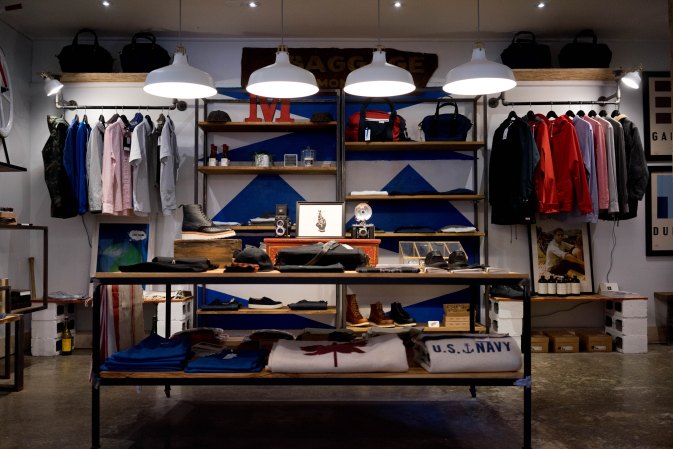
Just having FUN – at IKEA’s stores
The Swedish furniture company IKEA is another example of a store that generates a fun shopping experience to its customers, and it is often conceived as a good place to hangout other than just a store. Their stores are supplied with playgrounds for children, restaurants and food shops so you can spend the whole day there. You can wander around between the showrooms, touch the furniture (they encourage it!) and check out the new designs from different angles. Moreover, shopping there is usually a social experience (my wife would never let me decide on a new sofa alone), which makes it a much more enjoyable.
IKEA also has a wonderful eCommerce website, but it cannot compete with the experience we get in their brick and mortar stores. This is why IKEA’s main business is their stores, while the website only supports the business (in UK, for example, the online purchases are only 15% of IKEAs total revenue).

Current brick and mortar stores competitive advantage
Stores offer us personal experience and care that cannot be offered by eCommerce. When we enter a store next to our home, in many times we know the owner by name which makes the buying experience very personal. We get an advice from a reliable personal assistant that facilitates our decision making process. IKEA stores demonstrate how to make an enjoyable experience with our friends and family, much like any social recreation activity.
In addition, we all like to examine the item before buying, something that we can hardly do online. Though eCommerce is closing this gap with fast shipping and easy free return services, for many people and in many industries, we still want to look and feel the items before buying.
To conclude, eCommerce main focus today is to save us time as much as possible (which is very important), but it rarely delivers our additional needs for Fun, for a real Personal care, for a Social shopping experience and for checking the item out before buying it. Not delivering our buying needs fully is probably one of the main reasons for eCommerce being only 10% of the entire retail sales today, which means there is a great opportunity for eCommerce sites to grow.
How eCommerce can give a fight?
eCommerce has won many battles against Brick and Mortar stores, but yet to win the war. In order to improve its grasp, eCommerce should make us more emotionally involved:
- to check the item out before purchase it
- to deliver a fun experience
- to deliver a personal care
- to allow us shop with others (social)
These 4 gaps in today’s eCommerce experience are not easy to close at all. I don’t think that eCommerce can close them fully, however every step towards these directions will surely have a huge impact on the eCommerce success.
Virtual Reality (VR) – Just like being there
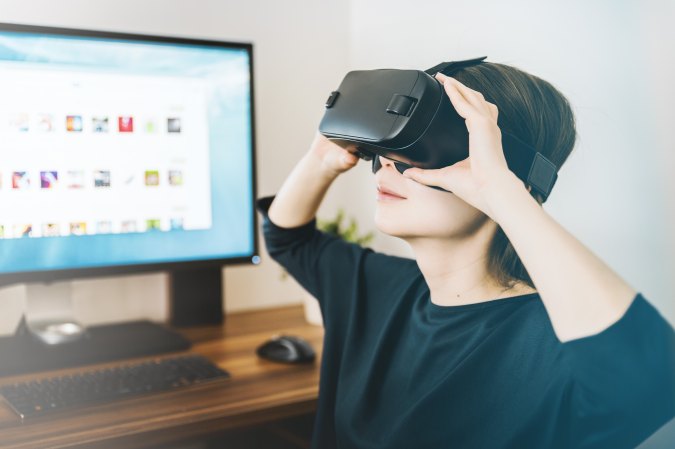
Not surprising that all major eCommerce sites are racing to find the best VR solutions. Such VR solutions minimize the gap of not checking the item out before purchasing it. VR enables the customers to get a real understanding of what they are about to buy.
In order to use VR, the buyer needs to wear a special headset that displays a 3 dimensions video which simulates a real time shopping experience. The buyers get a virtual tour inside a store, they can see the inventory in different angles, and they can try the items out, very similar to what is done on physical stores. Such experience reduces the fear of buying something that we haven’t been tried before.
For example, the online Tickets company StubHub, has created a VR solution in which before purchasing a ticket to a seat in a baseball game or a concert, we get a simulation of the view from the particular seat angle. Another example from the fashion industry, in which all major eCommerce sites, like eBay and Amazon, put great efforts in developing a virtual reality application in which buyers can try out clothing virtually before purchasing them.
The technology is still immature for a massive market penetration, but I believe that the future is very close with the latest improvements in technology, also for small scale eCommerce sites.
Having Fun – Games and eCommerce industries joining forces
Question: Have you ever used eCommerce sites for the sole purpose of having fun?
Most of us will say no, and that means eCommerce site are not fun. We enter Amazon or eBay to fulfill a need to buy something. Why can’t we treat an eCommerce site exactly like going to have fun at a mall? Many times we go to a mall just to wander around the stores and to enjoy our time. We go there without a predefined buying need but eventually we buy something, because we are there. The initial purpose was to have fun, not buying, and this is exactly what we should expect eCommerce to deliver.
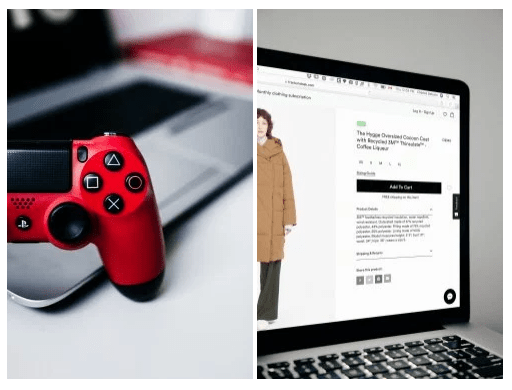
Combining online games and fun experiences, with a great shopping experience, can deliver the solution we need. Delivering the fun factor will make people to spend more time in eCommerce sites. It can be done by:
- Creating virtual reality experiences
- Enabling social and individual games
- Performing competitions between users and prize wining games
- Adding supersizes within the buying experience that will overwhelm the users
The funny thing is that today both the online gaming industry and the eCommerce industry are blooming, but not together. There is still no major joint venture to combine the two (except maybe virtual goods that are only relevant to the games themselves).
Personal social care, not just personal experience
As we all know, when purchasing in a physical store, in many time we get a very personal and caring experience. We shall differentiate between delivering a personal experience and delivering a personal care.
Personal experience – Not enough
Today, personal experience is mainly about predicting what the buyer wants to buy and presenting him relevant offers in order to increase conversation by reducing shopping time.
Most of such functionalities these days are based on machine learning algorithms that are highly dependent on the user’s past searches in multiple channels. It usually does not know if the user need is still valid, which leads to annoying repeatable emails and messages from the eCommerce site trying to convenience the buyer to purchase a product that is no longer needed. This creates the opposite effect and potentially harm the business because customers will be more conscious about their privacy and cautious when allowing email notifications. Which will eventually impact negatively the communication channels the site interacts with its users.
Don’t get me wrong, personalizing the content is very important, however, even if it is done perfectly, it doesn’t necessarily mean the buyer gets the feeling we care about him.
Personal care – Shop bot! yet to be proven
Delivering care to buyers is the ultimate level in delivering buying experience. When someone feels he is being cared, he will return over and over again, and buyers unconsciously expect the experience to do so.
Heading this direction is done by online experiences that imitate the experience on brick and mortar stores, where the buyer shares with the stores workers his pains, desires and needs. There, the buyer is active and share information as much as possible, while in eCommerce most of the data is collected without active interaction with the buyer. Buyer will be willing to actively interact with a machine (eCommerce site) as long as he gets very relevant answers and effective communication while shopping.
eCommerce can deliver that by a personal online chat, however it doesn’t scale. That is why today’s market is going towards the shop-bot technology, in which the platform manages a conversation with the buyer by leveraging machine learning algorithms. All big online retailers and numerous startup develop their bots to offer personalized buying experience, however they are yet to be proven as something effective. By the time bots can really deliver a consistent valuable experience, bots can still be used together with a human assistant that fill the gaps.
For sure the shop-bot is the future to bridge the gap of giving care and a very relevant and effective service to customers at scale.

Fun and Care – that’s it!
To sum it up, eCommerce sites need to ask themselves the same questions like brick and mortar stores ask for years.
- Do my customers really enjoy their time on site?
- Would they use it also when there is nothing in particular they need to buy?
- Do we make buyers feel as being cared?
- Do we fulfill buyers need for a social and personalized experience?
Whenever all these 4 difficult questions are answered positively, you know you have a winning experience that has the potential to beat Brick and Mortar stores last competitive advantages.
Ori Feldstein is a senior manager, experienced in eCommerce and in management of multi-million dollars programs in various industries – Big data, e-commerce and Defense. He is a co-founder of two family owned websites in the B2B eCommerce of chemicals (cheta.biz ; chemcenters.com). Follow him on Linkedin, @ori-feldstein.
 View on Leadership & eCommerce - by Ori Feldstein
Leave a comment